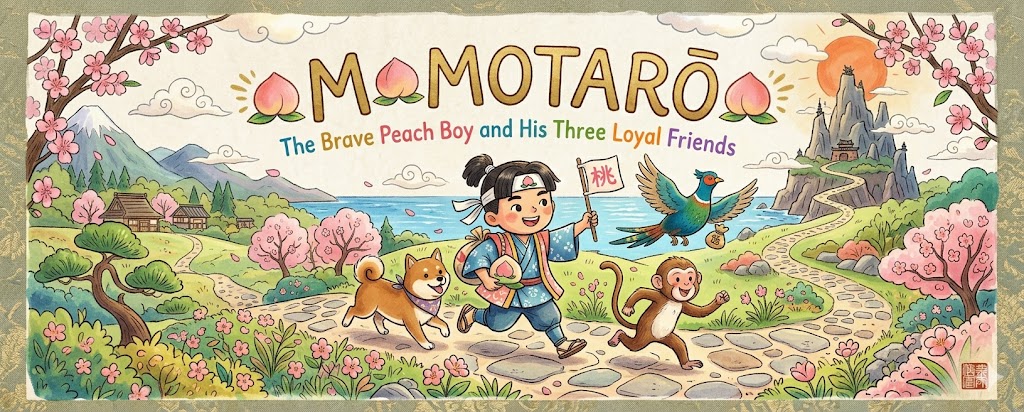
Momotarō — Şeftali Çocuk
Seviyenize uygun İngilizce hikaye okuyun. Anlamadığınız cümlelerin yanındaki + butonuna tıklayarak Türkçe çevirisini görebilirsiniz.
🌳 A2.1 Seviye
📝 36 Cümle
⏱️ 6 Dakika
🔤 Orta Kelimeler
Hikayede Geçen Temel Kelimeler
float — yüzmek, sürüklenmek
enormous — kocaman, devasa
raise — büyütmek, yetiştirmek
announce — duyurmak, ilan etmek
protect — korumak
village — köy
dumplings — kibi dango (Japon tatlısı)
loyal — sadık, vefalı
join — katılmak
stormy — fırtınalı
gate — kapı, geçit
fierce — vahşi, azgın
surrender — teslim olmak
treasure — hazine
stolen — çalınmış
weep — ağlamak
celebrate — kutlamak
proud — gururlu
forgiveness — af, bağışlanma
courage — cesaret
beyond — ötesinde, ötesine
grateful — minnettar, şükran duyan
Momotarō
Şeftali Çocuk
One morning, an old woman walked down to the river to wash clothes.
Bir sabah yaşlı bir kadın çamaşır yıkamak için nehre indi.
She saw the most enormous peach she had ever seen floating slowly downstream.
Hayatında gördüğü en kocaman şefalinin nehirde yavaşça sürüklendiğini gördü.
The peach was bigger than a watermelon and its skin was perfectly pink.
Şeftali bir karpuzdan daha büyüktü ve kabuğu mükemmel bir pembe renkteydi.
She took it home, and when she cut it open, a healthy baby boy jumped out.
Eve götürdü ve açtığında içinden sağlıklı bir erkek bebek fırladı.
"The gods sent him to us because we have no children," said the old man joyfully.
"Tanrılar onu bize gönderdi çünkü çocuğumuz yok," dedi yaşlı adam sevinçle.
They raised the boy with love and named him Momotarō, which means "Peach Boy".
Çocuğu sevgiyle büyüttüler ve "Şeftali Çocuk" anlamına gelen Momotarō adını verdiler.
Momotarō grew faster and stronger than any other child in the village.
Momotarō, köydeki diğer tüm çocuklardan daha hızlı büyüdü ve güçlendi.
He was the most helpful boy around, and everyone loved him.
Çevresindeki en yardımsever çocuktu ve herkes onu severdi.
One day, Momotarō sat down with his parents after breakfast and looked serious.
Bir gün Momotarō kahvaltıdan sonra ailesiyle oturdu ve ciddi bir ifade taktı.
"Monsters on the Demon Island are stealing from our people, so I must go and stop them," he said.
"Şeytan Adası'ndaki canavarlar halkımızın mallarını çalıyor, bu yüzden gidip durdurmam gerekiyor," dedi.
The old woman wept because she was worried, but she prepared the best dumplings for his journey.
Yaşlı kadın endişeli olduğu için ağladı ama yolculuğu için en iyi köfteleri hazırladı.
"Come back safely, my son," she said, and held his hands tightly before he left.
"Sağ salim dön, oğlum," dedi ve o ayrılmadan önce ellerini sıkıca tuttu.
When Momotarō was walking through the forest, a large dog came running towards him.
Momotarō ormandan geçerken büyük bir köpek koşarak yanına geldi.
"I can smell your dumplings and they are the best in Japan! Give me one and I will join you," said the dog.
"Köftelerinin kokusunu alıyorum ve Japonya'nın en iyisi bunlar! Bir tane ver, ben de sana katılayım," dedi köpek.
Momotarō gave him a dumpling, and the loyal dog walked by his side from then on.
Momotarō ona bir köfte verdi ve sadık köpek o andan itibaren yanı başında yürüdü.
After the forest, a quick monkey dropped down from a tall tree and blocked the road.
Ormandan sonra hızlı bir maymun yüksek bir ağaçtan atlayıp yolu kapattı.
"I heard about the Demon Island, and I want to fight for justice too," the monkey said confidently.
"Şeytan Adası'nı duydum ve ben de adalet için savaşmak istiyorum," dedi maymun kendinden emin bir şekilde.
Then a clever pheasant flew down and joined the group before they reached the coast.
Ardından zekî bir sülün uçup indi ve sahile ulaşmadan önce gruba katıldı.
The four companions sailed across the stormy sea towards the dark island on the horizon.
Dört yoldaş fırtınalı denizi aşarak ufuktaki karanlık adaya doğru yelken açtı.
When they arrived at the island, the iron gate of the fortress was bigger than any door Momotarō had ever seen.
Adaya vardıklarında kalenin demir kapısı Momotarō'nun gördüğü her kapıdan daha büyüktü.
The pheasant flew over the walls and opened the gate from the inside, so they all went in.
Sülün duvarların üzerinden uçup kapıyı içeriden açtı, böylece hepsi içeri girdi.
The fierce monster leader roared and rushed forward, but Momotarō did not step back.
Vahşi canavar lideri kükredi ve ilerledi ama Momotarō geri adım atmadı.
"Return what you stole, and leave our people in peace!" Momotarō shouted bravely.
"Çaldıklarınızı iade edin ve halkımızı rahat bırakın!" diye bağırdı Momotarō cesurca.
The dog bit, the monkey climbed and threw stones, and the pheasant pecked at the monsters' eyes.
Köpek ısırdı, maymun tırmandı ve taş attı, sülün ise canavarların gözlerini gagaladı.
Momotarō fought harder than all of them, and the monsters were soon surrounded.
Momotarō hepsinden sert savaştı ve canavarlar kısa sürede kuşatıldı.
The monster leader knelt down and asked for forgiveness because he knew they had lost.
Canavar lideri diz çöktü ve af diledi çünkü yendiklerini biliyordu.
"We will never trouble your village again," the monster promised, and they surrendered all the stolen treasure.
"Köyünüzü bir daha rahatsız etmeyeceğiz," diye söz verdi canavar ve çaldıkları tüm hazineyi teslim ettiler.
Momotarō and his three companions sailed back home with the treasure loaded on the boat.
Momotarō ve üç yoldaşı hazineyi tekneye yükleyerek eve yelken açtı.
When the old man and woman saw him returning, they ran to the shore and wept with joy.
Yaşlı adam ve kadın onun döndüğünü görünce sahile koştular ve sevinçle ağladılar.
The whole village came out to celebrate, and the people were grateful for Momotarō's courage.
Tüm köy kutlamak için dışarı çıktı ve insanlar Momotarō'nun cesaretine minnettardı.
From that day on, peace spread beyond the village, and Momotarō's name was never forgotten.
O günden itibaren barış köyün ötesine yayıldı ve Momotarō'nun adı hiç unutulmadı.
Bu Hikayeyi İndirin
Hikayeyi çevrimdışı okumak, yaydırmak veya sınıfta kullanmak için Word formatında indirin.
Anlama Soruları — Comprehension Questions
1. Why did the old man believe the gods sent Momotarō to them?
2. What does the name "Momotarō" mean?
3. How did the group get inside the monster fortress?
4. What can you tell about Momotarō's character from the way he treated the dog, monkey, and pheasant?
5. Why do you think the monster leader decided to surrender instead of continuing to fight?
Doğru Cevap