

A2.1
Seviyeyi değiştir
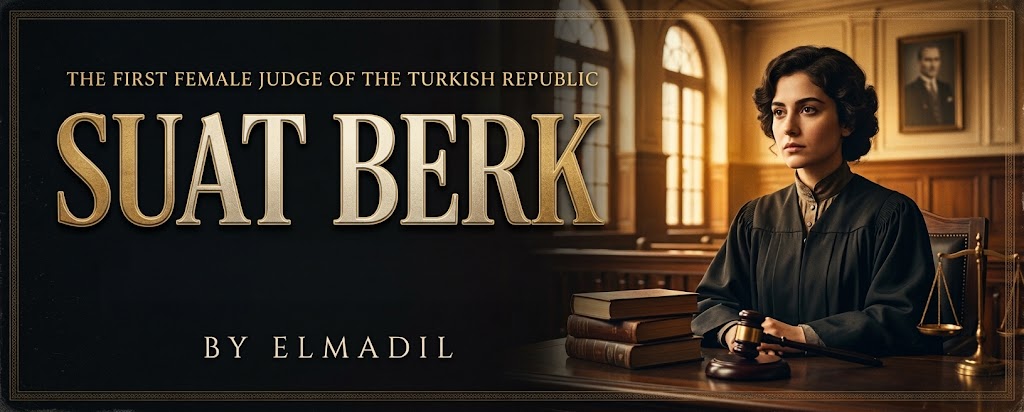
Suat Berk — İlk Türk Kadın Hakim
Seviyenize uygun İngilizce biyografi okuyun. Anlamadığınız cümlelerin yanındaki + butonuna tıklayarak Türkçe çevirisini görebilirsiniz.
A2.1 Seviye
35 Cümle
5 Dakika
Hukuk
Biyografide Geçen Temel Kelimeler
judge — hâkim
lawyer — avukat
law — hukuk
empire — imparatorluk
republic — cumhuriyet
graduate — mezun olmak
justice of the peace — sulh hâkimi
pioneer — öncü
appoint — atamak
juvenile court — çocuk mahkemesi
doctorate — doktora
captain — kaptan
navy — donanma
marriage — evlilik
bar association — baro
retire — emekli olmak
public service — kamu hizmeti
century — yüzyıl
bury — defnetmek
career — kariyer
rule — yönetim
courage — cesaret
Suat Berk
İlk Türk Kadın Hakim
Suat Berk was born on 2 April 1901 in Istanbul.
Suat Berk 2 Nisan 1901'de İstanbul'da doğdu.
At that time, Istanbul was part of the Ottoman Empire.
O dönemde İstanbul, Osmanlı İmparatorluğu'nun bir parçasıydı.
Her birth name was Suat Hilmi, and she later became known as Suat Berk.
Doğum adı Suat Hilmi'ydi ve daha sonra Suat Berk adıyla tanındı.
Not much is known about her childhood, but her life was full of changes.
Çocukluğu hakkında çok bilgi yok ama hayatı değişimlerle doluydu.
She lived through the end of the empire and the birth of the Republic.
İmparatorluğun sonunu ve Cumhuriyet'in doğuşunu yaşadı.
Suat went to the law school of Istanbul University.
Suat, İstanbul Üniversitesi Hukuk Fakültesi'ne gitti.
At that time, the university was called Darülfunun.
O zamanlar üniversitenin adı Darülfünun'du.
She graduated from the law school, and then she began her career.
Hukuk fakültesinden mezun oldu, sonra kariyerine başladı.
In 1925, she was appointed as a justice of the peace.
1925'te sulh hâkimi olarak atandı.
A justice of the peace is a kind of local judge.
Sulh hâkimi, yerel bir tür hâkimdir.
Because of this job, Suat became the first woman judge in Turkey.
Bu görev sayesinde Suat, Türkiye'nin ilk kadın hâkimi oldu.
Before her, no woman in Turkey had worked as a judge.
Ondan önce Türkiye'de hiçbir kadın hâkimlik yapmamıştı.
This was a very important moment for women in her country.
Bu, ülkesindeki kadınlar için çok önemli bir andı.
In 1925, many countries were allowing women judges only in juvenile courts.
1925'te birçok ülke kadın hâkimlere yalnızca çocuk mahkemelerinde izin veriyordu.
So Suat's position was unusual for that time.
Yani Suat'ın konumu o dönem için alışılmadıktı.
It was probably not easy, but she continued her career.
Muhtemelen kolay değildi ama o kariyerine devam etti.
In 1933, Suat went to Berlin to study for her doctorate.
1933'te Suat, doktora çalışması için Berlin'e gitti.
Berlin was far from Turkey, but she still went there to study.
Berlin, Türkiye'den uzaktı ama o yine de çalışmak için oraya gitti.
At that time, Germany was under Nazi rule.
O dönemde Almanya, Nazi yönetimi altındaydı.
While she was studying in Berlin, she met Niyazi Ozman.
Berlin'de okurken Niyazi Ozman ile tanıştı.
He was a captain in the Turkish Navy.
O, Türk Donanması'nda bir kaptandı.
They got married, but the marriage lasted only a short time.
Evlendiler ama evlilikleri yalnızca kısa bir süre sürdü.
From this marriage, Suat had one son, and his name was Ahmet.
Bu evlilikten Suat'ın bir oğlu oldu ve adı Ahmet'ti.
In 1951, she was elected as a member of the Ankara Bar Association.
1951'de Ankara Barosu'na üye seçildi.
She served in public service until she retired.
Emekli olana kadar kamu hizmetinde çalıştı.
After she retired, she continued working as a lawyer.
Emekli olduktan sonra avukat olarak çalışmaya devam etti.
She worked for three big institutions: İşbank, Halkbank and Tekel.
Üç büyük kuruma avukatlık yaptı: İş Bankası, Halkbank ve Tekel.
She was both a mother and a lawyer, so her life was busy.
Hem anneydi hem avukat, bu yüzden hayatı yoğundu.
Suat lived to be 101, so she saw more than a century of history.
Suat 101 yaşına kadar yaşadı, bu yüzden bir yüzyıldan fazla tarihe tanık oldu.
During her long life, there were two world wars.
Uzun ömrü boyunca iki dünya savaşı yaşandı.
She died in Bodrum on 15 July 2002.
15 Temmuz 2002'de Bodrum'da hayatını kaybetti.
She was buried in Bitez, a place near Bodrum.
Bodrum yakınlarındaki Bitez'e defnedildi.
Today, people remember her as a brave pioneer in Turkish law.
Bugün insanlar onu Türk hukukunda cesur bir öncü olarak anıyor.
Her story shows that courage and hard work can open new doors.
Hikâyesi, cesaret ve çalışkanlığın yeni kapılar açabileceğini gösteriyor.
Because of her example, more women could follow her path later.
Onun örneği sayesinde daha fazla kadın sonradan onun yolunu izleyebildi.
Bu Biyografiyi İndirin
Biyografiyi çevrimdışı okumak, yazdırmak veya sınıfta kullanmak için Word formatında indirin.
Anlama Soruları — Comprehension Questions
1. Why was Suat Berk's job in 1925 so important?
2. What can we understand about women judges in many countries in 1925?
3. When did Suat meet Niyazi Ozman?
4. What can we understand about Suat's life after 1951?
5. Why can we call Suat Berk a pioneer?
Dogru Cevap