

A2.2
Seviyeyi değiştir
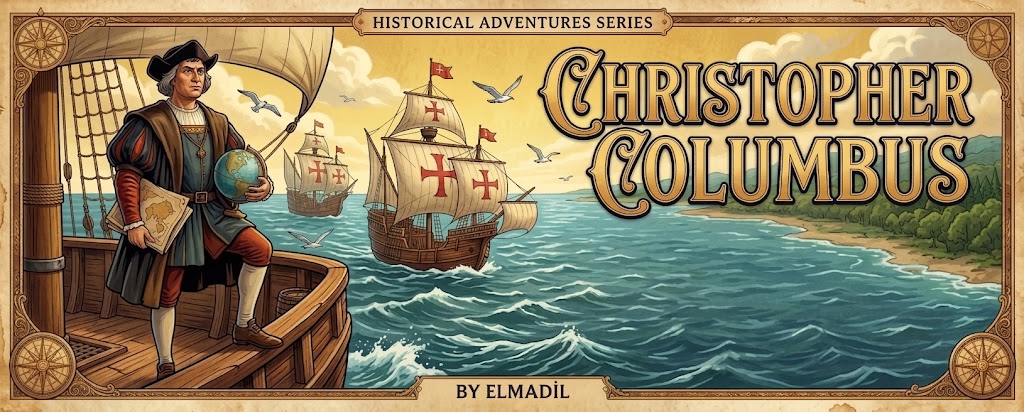
Christopher Columbus
Seviyenize uygun İngilizce biyografi okuyun. Anlamadığınız cümlelerin yanındaki + butonuna tıklayarak Türkçe çevirisini görebilirsiniz.
A2.2 Seviye
44 Cümle
7 Dakika
Tarih
Biyografide Geçen Temel Kelimeler
weaver — dokumacı
harbor — liman
admired — hayran olunan
injured — yaralı
determined — kararlı
geographer — coğrafyacı
calculation — hesaplama
confident — kendinden emin
disappointed — hayal kırıklığına uğramış
convinced — ikna olmuş
monarch — hükümdar
fund — finanse etmek
crew — mürettebat
continent — kıta
disease — hastalık
conflict — çatışma
suffering — acı
courage — cesaret
determination — kararlılık
legacy — miras
contribution — katkı
contradiction — çelişki
navigator — denizci, yol bulucu
Christopher Columbus
Christopher Columbus was born in Genoa, Italy, in 1451, into a family of modest wool weavers.
Christopher Columbus 1451'de İtalya'nın Cenova kentinde, mütevazı bir yün dokumacısı ailesinde dünyaya geldi.
While other children were playing in the streets, young Columbus was watching the ships in the busy harbor.
Diğer çocuklar sokaklarda oynarken, genç Columbus hareketli limandaki gemileri izliyordu.
Although his family was not wealthy, they encouraged him to work hard and dream big.
Ailesi zengin olmasa da, onu çok çalışmaya ve büyük hayaller kurmaya teşvik ettiler.
He grew up surrounded by sailors, and he often listened to their exciting stories about distant lands.
Denizcilerin arasında büyüdü ve onların uzak diyarlar hakkındaki heyecan verici hikayelerini sık sık dinledi.
Even though he had little formal education, Columbus taught himself to read and write.
Resmi eğitimi çok az olmasına rağmen, Columbus kendi kendine okumayı ve yazmayı öğrendi.
As soon as he was old enough, he wanted to become a sailor like the men he admired.
Yeterince büyüdüğü anda, hayran olduğu adamlar gibi bir denizci olmak istedi.
At the age of fourteen, Columbus went to sea for the first time.
On dört yaşında, Columbus ilk kez denize açıldı.
Life on board was hard, and he had to learn quickly in order to survive.
Gemideki hayat zordu ve hayatta kalmak için hızla öğrenmesi gerekiyordu.
In 1476, pirates attacked his ship, and it sank near the coast of Portugal.
1476'da korsanlar gemisine saldırdı ve gemi Portekiz kıyılarına yakın bir yerde battı.
Columbus was able to swim to shore, although he was badly injured.
Ağır yaralanmış olsa da, Columbus kıyıya kadar yüzebildi.
He felt frightened, but he did not give up on his love of the sea.
Korkmuştu ama denize olan sevgisinden vazgeçmedi.
This dangerous experience made him stronger and more determined than he had ever been before.
Bu tehlikeli deneyim onu her zamankinden daha güçlü ve kararlı yaptı.
Columbus settled in Portugal, where he studied geography, astronomy, and navigation carefully.
Columbus Portekiz'e yerleşti ve orada coğrafya, astronomi ve denizcilik konularını dikkatle inceledi.
He read the works of famous geographers, and he learned how to make accurate maps.
Ünlü coğrafyacıların eserlerini okudu ve doğru harita yapmayı öğrendi.
Columbus believed that he could reach Asia by sailing west across the Atlantic Ocean.
Columbus, Atlantik Okyanusu'nu batıya doğru geçerek Asya'ya ulaşabileceğine inanıyordu.
Many experts disagreed with him because they thought the ocean was too large to cross.
Birçok uzman onunla aynı fikirde değildi çünkü okyanusun geçmek için çok büyük olduğunu düşünüyorlardı.
However, Columbus remained confident in his own calculations, even though other sailors doubted him.
Ancak diğer denizciler ondan şüphe etse bile, Columbus kendi hesaplamalarına güvenmeye devam etti.
He often said that determination, not luck, would make his plan succeed in the end.
Sık sık, planını sonunda başarıya ulaştıracak şeyin şans değil kararlılık olduğunu söylerdi.
In 1479, Columbus married Filipa Moniz, and the couple had a son named Diego.
1479'da Columbus, Filipa Moniz ile evlendi ve çiftin Diego adında bir oğlu oldu.
After his wife died, Columbus felt lonely, but he continued to plan his voyage.
Eşi öldükten sonra Columbus kendini yalnız hissetti, ama yolculuğunu planlamaya devam etti.
He asked King John II of Portugal for ships, but the king refused his request.
Portekiz Kralı II. John'dan gemi istedi, ama kral talebini reddetti.
Columbus felt disappointed, although he quickly decided to try his luck in Spain instead.
Hayal kırıklığına uğramış olsa da, hemen İspanya'da şansını denemeye karar verdi.
He presented his idea to King Ferdinand and Queen Isabella, hoping they would support him.
Fikrini Kral Ferdinand ve Kraliçe İsabella'ya sundu ve onu desteklemelerini umdu.
At first, the Spanish rulers were not interested, and Columbus had to wait for years.
İlk başta İspanyol yöneticiler ilgilenmedi ve Columbus yıllarca beklemek zorunda kaldı.
People said that his plan was too risky and that he was going to fail.
İnsanlar onun planının çok riskli olduğunu ve başarısız olacağını söylüyordu.
Finally, in January 1492, the Spanish monarchs agreed to fund his dangerous voyage.
Sonunda, Ocak 1492'de İspanyol krallar tehlikeli yolculuğunu finanse etmeyi kabul etti.
Columbus felt proud because he was finally going to test his life-long theory.
Columbus gurur duydu çünkü nihayet ömür boyu süren teorisini test edecekti.
He left the port of Palos in August 1492 with three small ships.
Ağustos 1492'de üç küçük gemiyle Palos limanından yola çıktı.
The ships were called the Niña, the Pinta, and the Santa María.
Gemilerin adları Niña, Pinta ve Santa María idi.
During the long voyage, the sailors became worried because they could not see any land.
Uzun yolculuk sırasında, denizciler kara göremedikleri için endişelenmeye başladı.
Although the crew wanted to turn back, Columbus convinced them to continue a little longer.
Mürettebat geri dönmek istese de, Columbus onları biraz daha devam etmeye ikna etti.
On October 12, 1492, they finally reached a small island in the Caribbean Sea.
12 Ekim 1492'de sonunda Karayip Denizi'nde küçük bir adaya ulaştılar.
Columbus was convinced that he had finally found a new route to Asia.
Columbus, sonunda Asya'ya yeni bir yol bulduğuna ikna olmuştu.
In fact, Columbus had discovered a continent that Europeans did not know before.
Aslında Columbus, Avrupalıların daha önce bilmediği bir kıtayı keşfetmişti.
He made three more voyages to the Americas over the following years.
Sonraki yıllarda Amerika'ya üç yolculuk daha yaptı.
These voyages connected Europe and the Americas, changing the world forever.
Bu yolculuklar Avrupa ile Amerika'yı birbirine bağlayarak dünyayı sonsuza dek değiştirdi.
However, his arrival also brought disease, conflict, and great suffering to native people.
Ancak varışı, yerli halka hastalık, çatışma ve büyük acı da getirdi.
Columbus was not always fair to the people he met, and he made serious mistakes.
Columbus, karşılaştığı insanlara her zaman adil davranmadı ve ciddi hatalar yaptı.
He died in Spain in 1506, still believing that he had reached Asia.
Hala Asya'ya ulaştığına inanarak 1506'da İspanya'da öldü.
Today, historians see Columbus as a complicated figure with both courage and cruelty.
Bugün tarihçiler, Columbus'u hem cesaret hem de zulüm barındıran karmaşık bir figür olarak görüyor.
His determination and skill as a navigator changed the entire course of world history.
Kararlılığı ve denizcilik becerisi, dünya tarihinin gidişatını tamamen değiştirdi.
At the same time, his contact with the Americas caused great pain for native communities.
Aynı zamanda, Amerika ile teması birçok yerli topluluk için büyük acıya neden oldu.
Because of this contradiction, people around the world still debate his true legacy.
Bu çelişki yüzünden, dünya çapında insanlar hala onun gerçek mirasını tartışıyor.
Columbus remains one of history's most famous explorers, admired and criticized at the same time.
Columbus, hem hayranlık duyulan hem de eleştirilen, tarihin en ünlü kaşiflerinden biri olarak kalıyor.
Bu Biyografiyi İndirin
Biyografiyi çevrimdışı okumak, yazdırmak veya sınıfta kullanmak için Word formatında indirin.
Anlama Soruları — Comprehension Questions
1. Why did Columbus decide to try his luck in Spain after Portugal refused him?
2. What can we infer about Columbus's character from his response to the 1476 shipwreck?
3. Why do historians describe Columbus as "a complicated figure"?
4. What was the main long-term consequence of Columbus's voyages for world history?
5. Why do people around the world still debate Columbus's legacy today?
Dogru Cevap