

A2.1
Seviyeyi değiştir
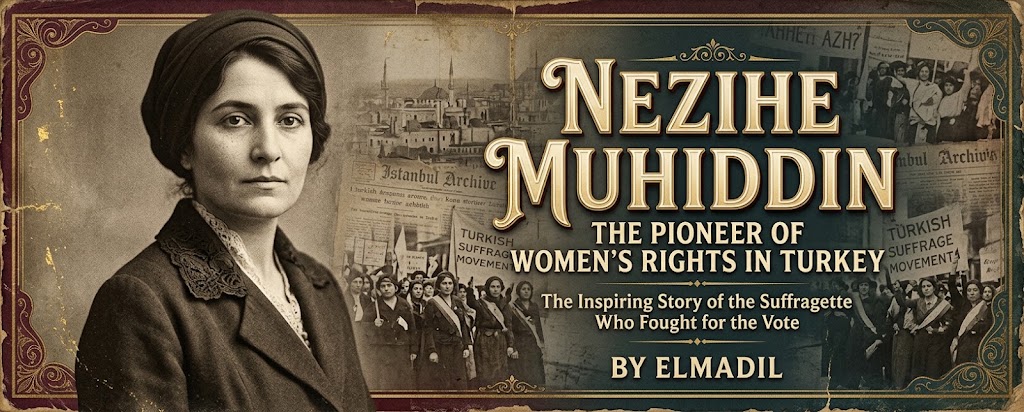
Nezihe Muhiddin — Türkiye'nin İlk Kadın Gazetecisi
Seviyenize uygun İngilizce biyografi okuyun. Anlamadığınız cümlelerin yanındaki + butonuna tıklayarak Türkçe çevirisini görebilirsiniz.
A2.1 Seviye
37 Cümle
7 Dakika
Kadın Hakları
Biyografide Geçen Temel Kelimeler
official — devlet memuru
gathering — toplantı, buluşma
private teacher — özel öğretmen
divorce — boşanma
association — dernek
magazine — dergi
congress — kongre
political party — siyasi parti
government — hükümet
refuse — reddetmek
disappointed — hayal kırıklığına uğramış
give up — pes etmek
union — birlik
candidate — aday
parliament — meclis
conflict — anlaşmazlık
accuse — suçlamak
reputation — itibar
vote — oy vermek, oy
grave — mezar
pioneer — öncü
rights — haklar
Nezihe Muhiddin
Türkiye'nin İlk Kadın Gazetecisi
Nezihe Muhiddin was born in 1889 in Kandilli, a neighborhood of Istanbul.
Nezihe Muhiddin 1889'da İstanbul'un bir semti olan Kandilli'de doğdu.
Her father was a state official, and her mother was from an important family.
Babası bir devlet memuruydu ve annesi önemli bir aileden geliyordu.
Her family valued education, so Nezihe studied at home with private teachers.
Ailesi eğitime değer verdiği için Nezihe evde özel öğretmenlerle okudu.
She learned French, German and Persian, and she read a lot of books.
Fransızca, Almanca ve Farsça öğrendi ve çok kitap okudu.
Her mother often took her to gatherings where women talked about women's rights.
Annesi onu sık sık kadınların kadın haklarını konuştuğu toplantılara götürürdü.
She listened carefully, so she began to think about women's lives.
Dikkatle dinledi, bu yüzden kadınların hayatları hakkında düşünmeye başladı.
When she was 18, she married Muhlis Ethem, but the marriage did not last.
18 yaşındayken Muhlis Ethem'le evlendi ama evlilik uzun sürmedi.
After the divorce, life was difficult for a young woman in those years.
Boşandıktan sonra, o yıllarda genç bir kadın için hayat zordu.
Later, she married Memduh Tepedelengil, who worked for the city of Istanbul.
Daha sonra İstanbul şehrinde çalışan Memduh Tepedelengil ile evlendi.
After the 1908 revolution, she worked as a teacher in an industrial school.
1908 devriminden sonra bir sanayi okulunda öğretmen olarak çalıştı.
Later she became a school director and managed several schools in Istanbul.
Daha sonra okul müdürü oldu ve İstanbul'da birkaç okulu yönetti.
During World War I, she and her students knitted clothes for the army.
I. Dünya Savaşı sırasında, o ve öğrencileri ordu için örgü ördü.
In 1913, she became the secretary general of an association that protected Turkish women.
1913'te Türk kadınlarını koruyan bir derneğin genel sekreteri oldu.
At that time, she was writing for Kadınlar Dünyası, a women's magazine.
O sıralarda bir kadın dergisi olan Kadınlar Dünyası için yazıyordu.
She wrote about women's education, work and rights because she wanted a fairer society.
Kadınların eğitimi, işi ve hakları hakkında yazdı, çünkü daha adil bir toplum istiyordu.
She also wrote novels, stories and plays, and many people read them.
Ayrıca roman, hikâye ve oyunlar yazdı ve birçok insan onları okudu.
In 1923, Nezihe was preparing a women's congress at her own home.
1923'te kendi evinde bir kadın kongresi hazırlıyordu.
On June 15, 1923, women met at the Darülfünun hall in Istanbul.
15 Haziran 1923'te kadınlar İstanbul'daki Darülfünun salonunda toplandı.
They decided to form a political party, the Women's People Party.
Kadınlar Halk Fırkası adında siyasi bir parti kurmaya karar verdiler.
This happened before the Republic was announced, so it was a very brave step.
Bu, Cumhuriyet ilan edilmeden önce oldu, bu yüzden çok cesur bir adımdı.
Nezihe sent the official request, but the government did not allow the party.
Nezihe resmi başvuruyu gönderdi ama hükümet partiye izin vermedi.
Women had no political rights at that time, so the answer was no.
O zaman kadınların siyasi hakları yoktu, bu yüzden cevap hayırdı.
Nezihe was very disappointed, but she did not give up and kept working.
Nezihe çok hayal kırıklığına uğradı ama pes etmedi ve çalışmaya devam etti.
On February 7, 1924, she and her friends founded the Turkish Women's Union.
7 Şubat 1924'te arkadaşlarıyla Türk Kadınlar Birliği'ni kurdu.
She was its president until 1927, and the union opened courses for women.
1927'ye kadar başkanıydı ve birlik kadınlar için kurslar açtı.
The union also published a magazine called Kadın Yolu, and Nezihe wrote in it.
Birlik ayrıca Kadın Yolu adında bir dergi çıkardı ve Nezihe bu dergide yazdı.
In 1925, the union chose Nezihe and Halide Edip as candidates for parliament.
1925'te birlik, Nezihe ile Halide Edip'i meclis adayı olarak seçti.
They knew they could not win, but they wanted to make people think.
Kazanamayacaklarını biliyorlardı ama insanları düşündürmek istiyorlardı.
She was one of the first women in Turkey to run for political office.
Türkiye'de siyasi göreve aday olan ilk kadınlardan biriydi.
In 1927, there was a conflict in the union, and Nezihe lost her position.
1927'de birlikte bir anlaşmazlık yaşandı ve Nezihe görevini kaybetti.
People accused her of problems with money, but she was never punished.
İnsanlar onu para konusunda suçladı ama hiç ceza almadı.
The accusations hurt her reputation, and it was a painful time for her.
Suçlamalar itibarına zarar verdi ve bu onun için acı bir dönemdi.
In 1934, Turkish women won the vote, and Nezihe's early work helped that change.
1934'te Türk kadınları oy hakkını kazandı ve Nezihe'nin erken çalışmaları bu değişime yardımcı oldu.
She died in Istanbul in 1958 after a long and active life.
1958'de İstanbul'da uzun ve hareketli bir hayattan sonra öldü.
For many years, the official history of the country did not talk about her much.
Uzun yıllar boyunca ülkenin resmi tarihi ondan pek bahsetmedi.
In 2016, her grave was finished with her words: "Revolution without women is impossible."
2016'da mezarı, "Kadınsız inkılap mümkün değildir" sözleriyle tamamlandı.
Today, many people remember her as a pioneer of women's rights in Turkey.
Bugün birçok insan onu Türkiye'de kadın haklarının öncüsü olarak hatırlıyor.
Bu Biyografiyi İndirin
Biyografiyi çevrimdışı okumak, yazdırmak veya sınıfta kullanmak için Word formatında indirin.
Anlama Soruları — Comprehension Questions
1. Why did Nezihe become interested in women's lives when she was young?
2. Why was starting a women's party in 1923 a brave step?
3. What can we understand from Nezihe's reaction after the government refused her party?
4. Why do you think Nezihe and Halide Edip became candidates in 1925, even though they could not win?
5. What do the words on Nezihe's grave tell us about her?
Dogru Cevap